
Robotics Daily Brief - 05/01/26
Round-up of the most critical robotics news from the past 24 hours
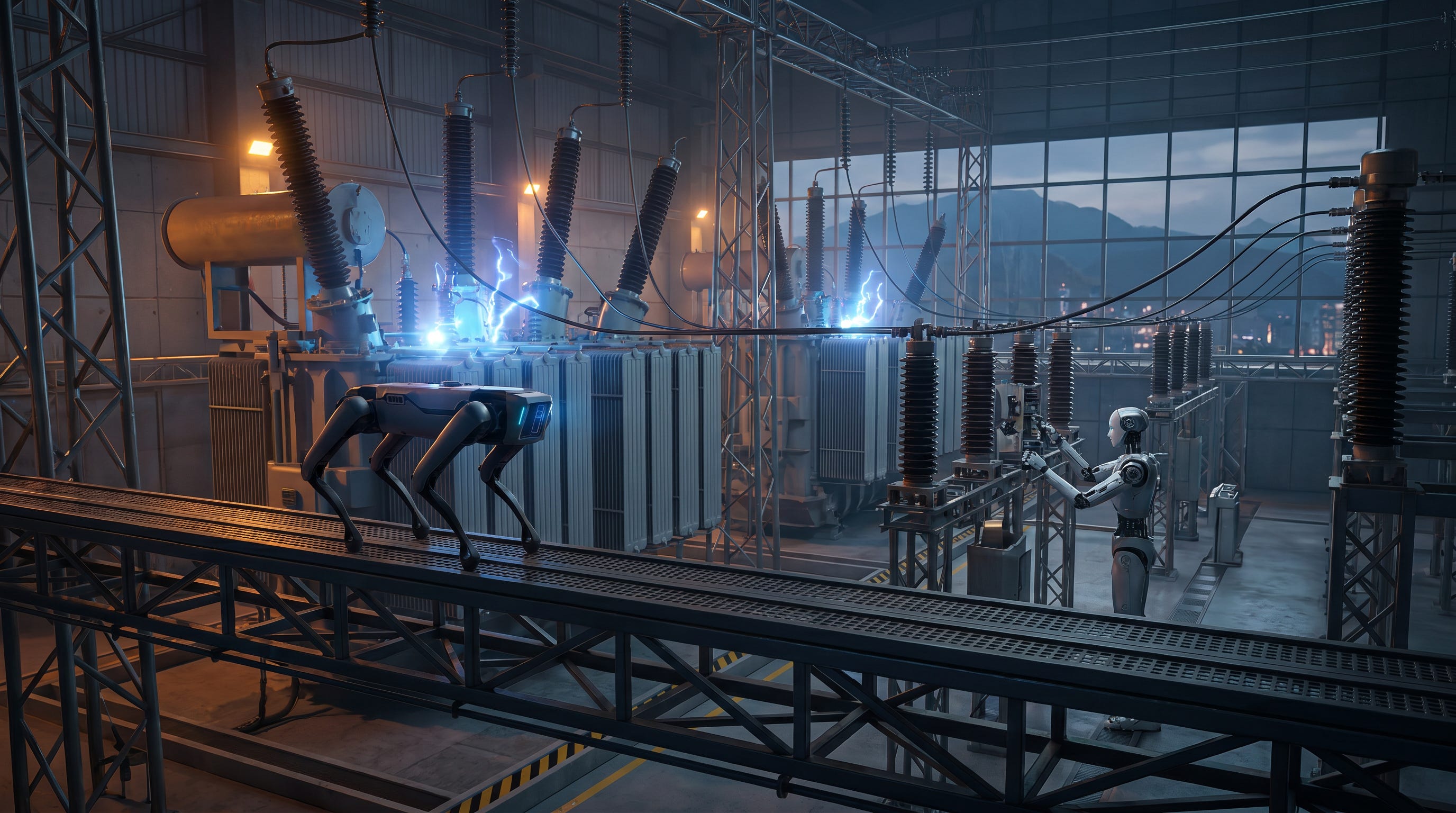
China’s robotics sector is experiencing unprecedented momentum, marked by the implementation of the nation’s first local regulation for embodied intelligence in Hangzhou and a historic 6.8 billion yuan procurement plan by the State Grid. Concurrently, leading manufacturers like Unitree and XPeng are accelerating the commercialization of humanoid robots with new product launches and mass production timelines.
Policy & Major Procurements
Hangzhou Enacts China’s First Local Embodied-Intelligence Robot Law (杭州市促进具身智能机器人产业发展条例)
The “Hangzhou Regulations on Promoting the Development of the Embodied Intelligence Robot Industry” officially took effect on May 1, 2026, marking China’s first local legislation dedicated to this sector. The comprehensive regulation, comprising seven chapters and 50 articles, establishes a legal definition for embodied-intelligence robots and mandates R&D support for core technologies such as motion control systems, sensors, and autonomous chips. It also requires the implementation of sandbox regulatory models and traceability systems while encouraging public-sector applications in emergency rescue, medical care, and urban management. Hangzhou has already cultivated a robust ecosystem with over 700 related enterprises, achieving an industry cluster output of 106.8 billion yuan in 2025. [1]
State Grid Corporation Unveils 6.8 Billion Yuan Embodied-Intelligence Procurement Plan (国家电网)
The State Grid Corporation of China has internally issued its “2026 Embodied Intelligence Development Plan,” detailing a massive procurement initiative for approximately 8,500 embodied intelligence devices this year, with a total investment of 6.8 billion yuan. The procurement is strategically divided into three main categories: 5,000 quadruped inspection robot dogs budgeted at 1.5 billion yuan for substations and mountainous terrain; 500 humanoid live-wire work robots budgeted at 2.5 billion yuan for high-voltage operations; and 3,000 dual-arm inspection robots budgeted at 1.8 billion yuan. Key domestic suppliers expected to participate include Unitree, Zhiyuan Robotics, UBTECH, Fourier Intelligence, and Yunshenshu. This initiative represents the largest single procurement of embodied intelligence in history and signals a rapid acceleration of “machine substitution” in China’s power sector. [2]
1,071 National Standards Take Effect Including Education Robot Safety (国家标准委)
On May 1, 2026, a total of 1,071 new national standards officially took effect across China. Among these is a critical standard for the robotics industry: “Education Robots - Safety Requirements and Test Methods.” This standard establishes comprehensive guidelines covering mechanical safety, electrical safety, functional safety, and information security, providing essential technical support for the broader deployment and safe operation of educational robots throughout the country. [3]
Product Launches & Commercialization
Unitree Launches Dual-Arm Humanoid Robot R1 Series at 26,900 Yuan (宇树科技)
Unitree Robotics has officially launched its new R1 series dual-arm humanoid robot, featuring an upper-body dual-arm design with a starting price of 26,900 yuan, making it the lowest-priced commercial humanoid robot in China. The R1 series offers 15 to 31 degrees of freedom, dual binocular vision, voice interaction capabilities, and 10 TOPS of head computing power. Designed for both home and factory scenarios, including parcel sorting and light industrial tasks, the battery-powered robot can operate for approximately 1.5 hours and supports interchangeable end-effectors. This launch further expands Unitree’s product lineup, which now ranges from the flagship H2 to the entry-level R1 series, solidifying its position following its STAR Market IPO application acceptance in March 2026. [4]
XPeng IRON Humanoid Robot Debuts with Mass Production Planned for End-2026 (小鹏集团)
XPeng Group unveiled its new-generation IRON humanoid robot at the 2026 Beijing International Auto Show, showcasing its integration into the company’s broader physical AI strategy. The IRON robot is equipped with three of XPeng’s self-developed Turing AI chips, delivering a total computing power of 2,250 TOPS, and utilizes an all-solid-state battery. CEO He Xiaopeng announced that the IRON robot is scheduled for mass production by the end of 2026, with commercial sales expected to commence in 2027 and a monthly production target in the thousands of units. [5]
[1] Sina Finance: 全国首部!《杭州市促进具身智能机器人产业发展条例》今起施行 (https://finance.sina.com.cn/jjxw/2026-05-01/doc-inhwkptm3442205.shtml)
[2] CNR: 国家电网68亿采购具身智能设备电力运维行业加速“机器换人” (https://www.cnr.cn/tech/techgd/20260430/t20260430_527606511.shtml)
[3] CCTV News: 1071项国家标准今起实施 (https://news.cctv.com/2026/04/30/ARTIP0nhO3cHgmQ4tlPzugse260430.shtml)
[4] 21Jingji: 宇树发布双臂人形机器人,售价2.69万元起 (https://www.21jingji.com/article/20260430/herald/3401e06fd125eaa8d057c9e0b6327755.html)
[5] XPeng Official: 小鹏汽车携全系车型亮相北京车展 (https://www.xiaopeng.com/news/company_news/5556.html)